According to the Immigration Law, Vietnamese citizens must meet specific conditions when leaving the country. These rules ensure national security, social order, and compliance with international agreements while protecting the rights of travelers.
✅ Conditions for Exit
A Vietnamese citizen may exit the country if they:
Hold a valid passport or international travel document issued by a competent Vietnamese authority.
Do not fall under cases of exit postponement as regulated by law (e.g., pending legal issues, national security concerns).
Comply with immigration procedures at border gates.
These conditions apply whether traveling for tourism, business, study, or personal reasons.
⚠️ Cases of Exit Denial or Postponement
Even with a valid passport, exit may be restricted if:
The citizen is involved in an ongoing investigation or criminal case.
There are unfulfilled administrative penalties or obligations.
National defense, security, or other state interests require postponement.
📑 Responsibilities of Citizens
When exiting Vietnam, citizens must:
Present valid immigration papers for inspection.
Follow regulations of both Vietnam and the destination country.
Use only the passport issued by Vietnamese competent agencies.
🌏 Support from Vietnam Entry Visa
For Vietnamese citizens planning to travel abroad, ensuring smooth immigration procedures is essential. Meanwhile, foreigners traveling to Vietnam must secure a valid visa before entry.
The Law on Exit and Entry of Vietnamese Citizens establishes the legal framework for how Vietnamese citizens can leave and enter the country. It also defines the roles and responsibilities of state management agencies and other related organizations or individuals involved in immigration procedures. This regulation ensures: Clear principles for managing the exit and entry…
The National Database on Exit and Entry of Vietnamese Citizens is a centralized, digital system designed to manage information related to Vietnamese citizens’ travel abroad and return home. This database plays a critical role in ensuring transparency, security, and efficiency in immigration management. 📌 Key Requirements for Establishment and Management Centralization and Digitalization All data…
Foreigners who wish to travel to Vietnam can apply for their visas directly at Vietnamese embassies or consulates abroad. This process is governed under Article 17 of Vietnam’s Immigration Law, ensuring proper legal procedures and smooth facilitation of entry for different categories of travelers. 📌 Who Can Apply at Overseas Vietnamese Agencies? Overseas Vietnamese agencies…
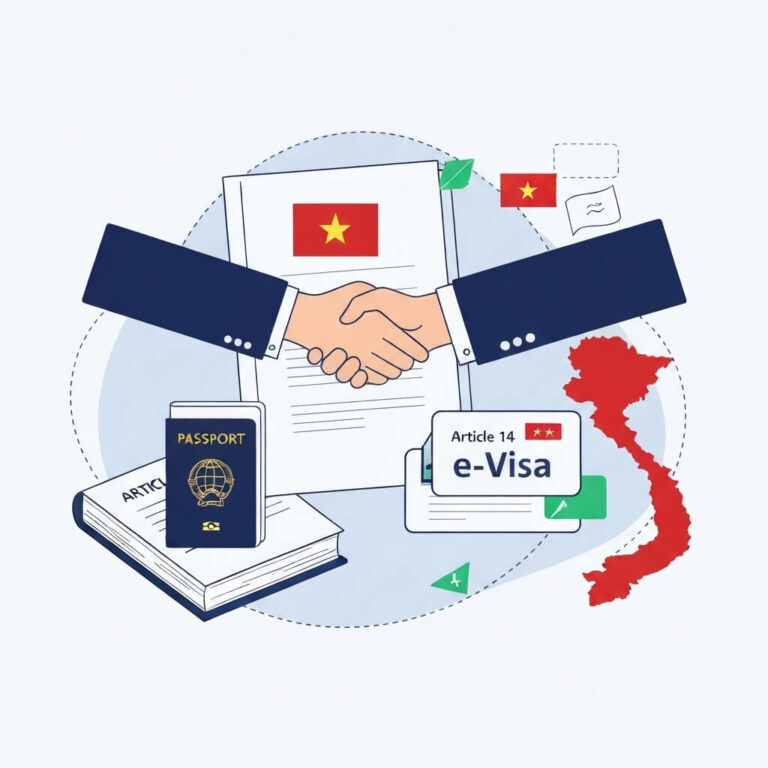
Under Article 14, Vietnamese agencies/organizations and certain individuals can invite or guarantee foreigners to enter Vietnam for business, work, study, visits, or other lawful purposes. Sponsors must verify the visitor’s purpose, follow legal procedures, and take responsibility for compliance during the stay. Who this helps (and the questions it answers) HR & companies: “Can our…
Article 42 of the Law on Exit and Entry of Vietnamese Citizens defines how information is collected and updated into the national database that tracks immigration activities. This system ensures accuracy, transparency, and security in managing Vietnamese citizens’ exit and entry records. 📊 What Information Is Collected? The national database on exit and entry includes…
On November 22, 2019, the National Assembly of Vietnam passed the Law on Exit and Entry of Vietnamese Citizens (No. 49/2019/QH14).The law, effective from July 1, 2020, regulates how Vietnamese citizens can obtain passports, travel abroad, and return to Vietnam, as well as circumstances where exit may be postponed. This article summarizes the key provisions…