Under the Law on Exit and Entry of Vietnamese Citizens, the Government Cipher Committee plays a crucial role in ensuring the security and management of immigration papers, especially passports with electronic chips.
✅ Responsibilities of the Government Cipher Committee
The Committee is tasked with:
Providing official digital signature authentication services for the issuance and management of passports containing electronic chips.
Ensuring data security and protecting sensitive information stored in passports.
Guiding ministries and related agencies in applying digital authentication to manage passports effectively.
Cooperating with the Ministry of Public Security and Ministry of Foreign Affairs in strengthening cybersecurity and safeguarding national interests in immigration processes.
By managing encryption and authentication, the Government Cipher Committee guarantees that Vietnam’s immigration system is both secure and internationally recognized.
🌏 Support from Vietnam Entry Visa
While the Government Cipher Committee ensures national-level passport security, travelers also need reliable visa support when planning to enter Vietnam.
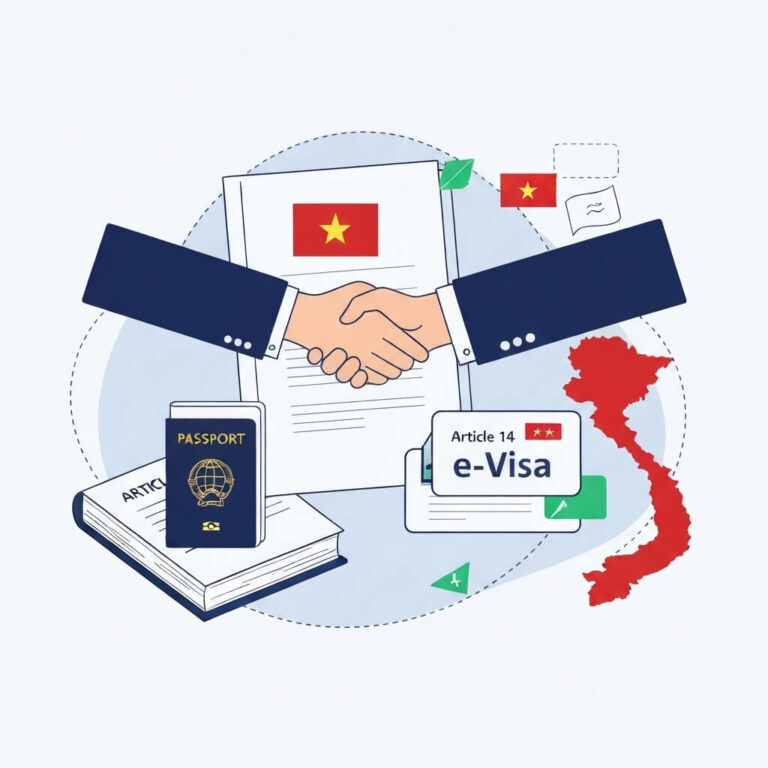
Under Article 14, Vietnamese agencies/organizations and certain individuals can invite or guarantee foreigners to enter Vietnam for business, work, study, visits, or other lawful purposes. Sponsors must verify the visitor’s purpose, follow legal procedures, and take responsibility for compliance during the stay. Who this helps (and the questions it answers) HR & companies: “Can our…
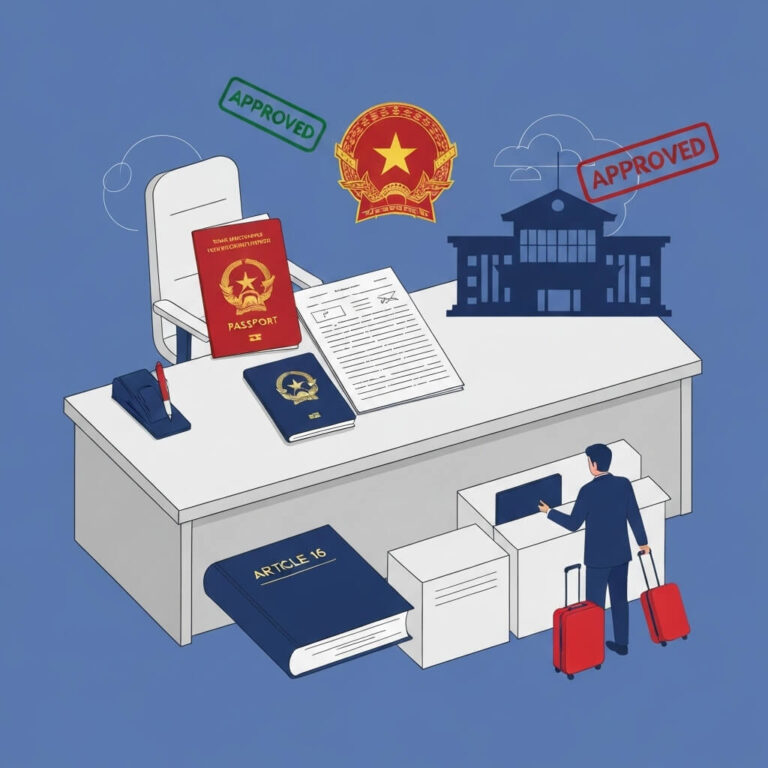
Not all foreigners enter Vietnam under diplomatic or special categories (NG1–NG4). For most visitors, workers, investors, or relatives, visa applications must be processed through the Immigration Management Agency (IMA).Article 16 of the Law on Entry, Exit, Transit, and Residence of Foreigners in Vietnam explains the procedures for agencies, organizations, and individuals inviting or guaranteeing foreigners…
Article 24 clarifies who manages diplomatic (HC) and official (CC) passports in Vietnam and how those passports must be controlled throughout their lifecycle. This helps prevent misuse, loss, or non-compliance when officials travel on duty or are reassigned. 1) Who is responsible for management? Under Article 11 (competent authorities) or their authorized designees must manage:…
The National Database on Exit and Entry of Vietnamese Citizens is a centralized, digital system designed to manage information related to Vietnamese citizens’ travel abroad and return home. This database plays a critical role in ensuring transparency, security, and efficiency in immigration management. 📌 Key Requirements for Establishment and Management Centralization and Digitalization All data…
The Ministry of National Defense (MND) plays a critical role in ensuring Vietnam’s border security and immigration control. Under Vietnam’s Immigration Law, the MND has clear responsibilities related to the exit and entry of Vietnamese citizens as well as the management of foreigners at border areas. 📌 Key Responsibilities of the Ministry of National Defense…
Article 19 of the Law on Exit and Entry of Vietnamese Citizens regulates who can be issued international travel documents. These documents are vital for crossing borders in areas where Vietnam has bilateral or multilateral agreements with neighboring countries. 👥 Who Can Be Granted International Travel Documents? According to Vietnamese immigration law, the following individuals…