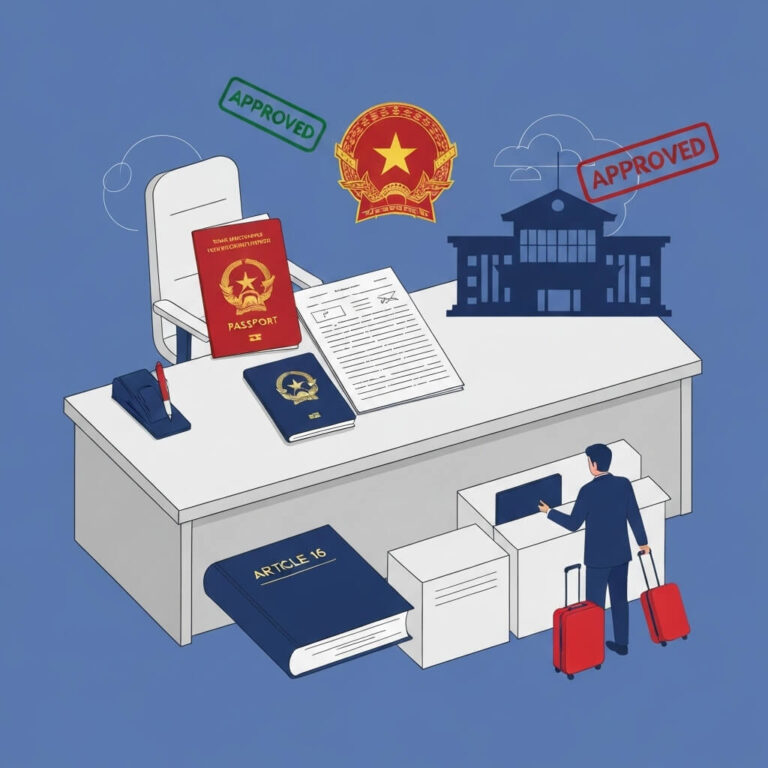
Article 51 establishes the effective date of the Law on Exit and Entry of Vietnamese Citizens. This law officially came into force after being passed by the National Assembly, setting the legal foundation for the management of passports, immigration documents, and the rights and obligations of Vietnamese citizens when traveling abroad or returning home.
✅ Key Points of Article 51
The law took legal effect from the date specified in the National Assembly’s resolution, ensuring consistency in managing entry and exit activities of citizens.
All immigration-related activities, including passport issuance, exit, and entry, must comply with this law from its effective date.
Previous regulations inconsistent with this law ceased to apply, reinforcing legal clarity and uniform implementation.
🌏 Vietnam Entry Visa – Your Trusted Partner in Immigration Services
While Article 51 defines the effectiveness of the law, travelers and citizens often need reliable visa services to ensure smooth journeys.
Under Vietnam’s Immigration Law, there are specific situations where a passport may be revoked or invalidated by the competent authority. These measures ensure national security, compliance with laws, and proper management of travel documents. 📌 Situations Leading to Passport Revocation or Invalidation A Vietnamese citizen’s passport can be revoked or invalidated in the following cases:…
Article 4 sets four governing principles for foreigners in Vietnam: **(1) comply with Vietnamese law and international treaties, (2) respect national sovereignty and security, (3) ensure transparent, convenient, unified immigration procedures, and (4) follow the “one-passport” rule for entry, exit, transit, and residence records. Who this helps: tourists, business travelers, expats/students, airlines and cruise lines,…
On November 22, 2019, the National Assembly of Vietnam passed the Law on Exit and Entry of Vietnamese Citizens (No. 49/2019/QH14).The law, effective from July 1, 2020, regulates how Vietnamese citizens can obtain passports, travel abroad, and return to Vietnam, as well as circumstances where exit may be postponed. This article summarizes the key provisions…
Article 2 of Vietnam’s Law on Entry, Exit, Transit, and Residence of Foreigners applies to (1) foreigners who enter, exit, transit, or reside in Vietnam, (2) Vietnamese state management agencies that administer immigration, and (3) related organizations and individuals that invite, sponsor, employ, transport, accommodate, or otherwise host foreigners. Who Article 2 Applies To (clear,…
Not all foreigners enter Vietnam under diplomatic or special categories (NG1–NG4). For most visitors, workers, investors, or relatives, visa applications must be processed through the Immigration Management Agency (IMA).Article 16 of the Law on Entry, Exit, Transit, and Residence of Foreigners in Vietnam explains the procedures for agencies, organizations, and individuals inviting or guaranteeing foreigners…
Article 1 of Vietnam’s Law on Entry, Exit, Transit, and Residence of Foreigners defines the scope of the immigration regime. It sets out principles, conditions, and procedures for entry, exit, transit, and residence; the rights and obligations of foreigners; and the responsibilities of Vietnamese agencies, organizations, and hosts that manage or invite foreigners. Who this…