Under Vietnam’s Law on Exit and Entry of Vietnamese Citizens, certain groups of individuals are entitled to be issued diplomatic passports. These passports serve as official state documents, allowing holders to travel abroad while representing Vietnam in diplomatic, governmental, and international capacities.
✅ Who Is Eligible for a Diplomatic Passport?
Diplomatic passports are granted to the following groups:
Senior leaders of the Communist Party of Vietnam, the State, the National Assembly, and the Government.
Officials assigned to work in Vietnamese diplomatic missions, consular offices, and international organizations.
Individuals holding diplomatic ranks such as attachés, military attachés, and their deputies.
Spouses, under-18 children, and in some cases, family members who accompany officials during their term of duty abroad.
Other persons as defined by international treaties or assigned by competent authorities for diplomatic purposes.
🔄 Purpose and Use of Diplomatic Passports
Official duty only: A diplomatic passport can only be used for state missions, foreign affairs, and official assignments abroad.
Not valid for personal travel: Holders must use an ordinary passport or apply for a Vietnam visa if they wish to travel for tourism, business, or family visits.
🌏 Traveling to Vietnam with the Right Visa
Even if you are a diplomatic passport holder, not all travel purposes qualify under its usage. For personal trips, you will need proper immigration documents.
Article 2 of Vietnam’s Law on Entry, Exit, Transit, and Residence of Foreigners applies to (1) foreigners who enter, exit, transit, or reside in Vietnam, (2) Vietnamese state management agencies that administer immigration, and (3) related organizations and individuals that invite, sponsor, employ, transport, accommodate, or otherwise host foreigners. Who Article 2 Applies To (clear,…
Article 19 of the Law on Exit and Entry of Vietnamese Citizens regulates who can be issued international travel documents. These documents are vital for crossing borders in areas where Vietnam has bilateral or multilateral agreements with neighboring countries. 👥 Who Can Be Granted International Travel Documents? According to Vietnamese immigration law, the following individuals…
On June 24, 2023, the 15th National Assembly of Vietnam passed Law No. 23/2023/QH15, amending provisions of: Law No. 49/2019/QH14 on Entry and Exit of Vietnamese Citizens. Law No. 47/2014/QH13 on Entry, Exit, Transit, and Residence of Foreigners in Vietnam (as amended by Law No. 51/2019/QH14). These amendments, effective from August 15, 2023, aim to…
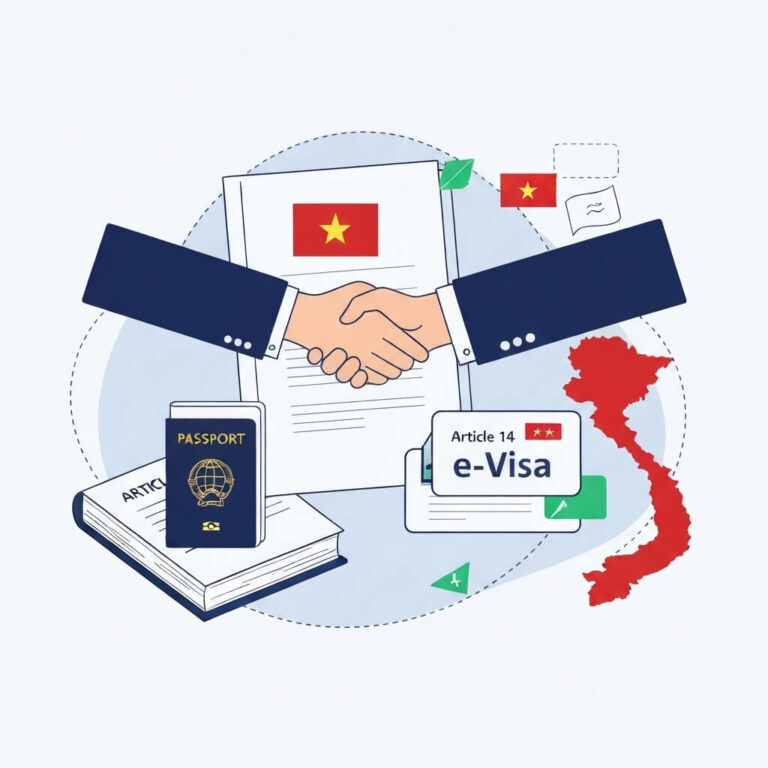
Under Article 14, Vietnamese agencies/organizations and certain individuals can invite or guarantee foreigners to enter Vietnam for business, work, study, visits, or other lawful purposes. Sponsors must verify the visitor’s purpose, follow legal procedures, and take responsibility for compliance during the stay. Who this helps (and the questions it answers) HR & companies: “Can our…
Article 41 of the Law on Exit and Entry of Vietnamese Citizens specifies the types of information stored in the National Immigration Database. This database ensures the government can manage, verify, and protect the identity of citizens when they travel abroad or return to Vietnam. ✅ Key Information Stored in the Database The national database…
Understanding the terminology used in Vietnam’s immigration law is essential for both Vietnamese citizens and foreign travelers navigating entry, exit, and visa procedures. Below is a simplified explanation of Article 2, along with practical context and how Vietnam Entry Visa can assist. Key Terms in Vietnam’s Immigration Law ExitThe act of a Vietnamese citizen leaving…